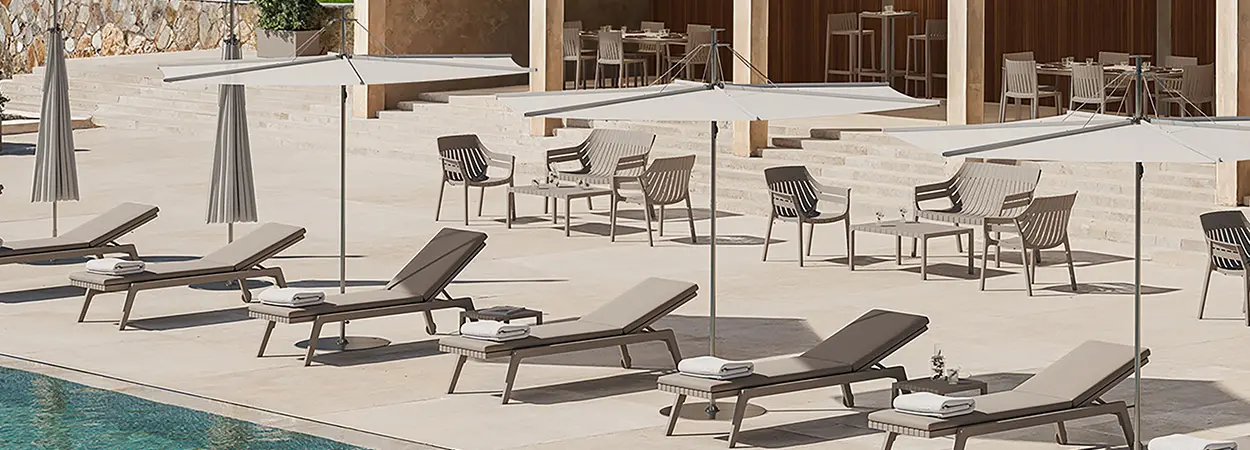
How to clean your outdoor furniture?

Take care of your outdoor spaces all year round with these practical and durable tips
Garden furniture is designed to withstand outdoor conditions, but if you want it to retain its appearance, comfort, and functionality for years, regular maintenance is key. In this guide, you’ll find essential cleaning and maintenance routines, valid for most materials, along with practical recommendations for each season of the year.
Whether you already have a teak dining set, a synthetic rattan sofa, or aluminum chairs, here you will learn how to care for them without complications. And if you prefer that we help you choose products that are easy to maintain, the De Tropen team is at your disposal to advise you.
🧽 Basic cleaning: what all outdoor furniture needs
Although each material has its own specific needs (which we cover in individual guides), there are common cleaning routines that are worth applying to all furniture:
| Action | Recommended frequency | What to wear | What to avoid |
|---|---|---|---|
| Remove dust and leaves | 1 time per week | Dry cloth or soft broom | Strong pressure air |
| Surface cleaning | Every 2–4 weeks | Warm water + neutral soap, soft sponge | Metal debris, aggressive detergents |
| Rinse and dry | After each cleaning | Clear water, a towel or let it air dry | Leaving the sun wet or not drying it |
| Check the fasteners and connections | Every 2–3 months | Allen key or screwdriver | Pressing too hard or using unrecommended oils |
💡 De Tropen Tip: If you don't use the furniture for a while, clean it before covering it or storing it. This prevents dirt or moisture from getting trapped under the covers.
🌦 Protection from the seasons: key tips by season
Spring and summer
- Deeply clean the furniture at the beginning of the season.
- Use lightweight covers if you don't use them daily.
- Check for signs of wear from the sun (textiles, varnishes, or paint).
- Avoid having the cushions soaked by sudden storms.
Autumn
- Remove leaves, soil, or seeds frequently.
- Start protecting it with waterproof covers or move it to covered areas.
- Apply oils or sealers if you have wooden furniture.
Winter
- Store furniture indoors in well-ventilated areas if possible.
- If they stay outside, cover them with breathable covers (avoid closed plastic bags).
- Elevate the paws from the ground to prevent them from touching stagnant water.
Conservation and long-term prevention
- Structural inspection: Check periodically for loose screws, unstable legs, or signs of rust or mold.
- Tissue maintenance: Wash the removable covers with mild detergent and cold water. Let them dry completely before re-using.
- Surface treatments: apply oils (for wood), anti-oxidant sprays (for metals) or UV protectors (for ropes and textiles) once a season if necessary.
🛠️ Aluminum (Modern and durable)

Cleaning: Use a soft sponge with water and neutral pH cleaner.
⚠️ Avoid: Pressure hoses or bleach products, as they damage the powder coating.
🧶 Synthetic Clay (Elegant and durable)
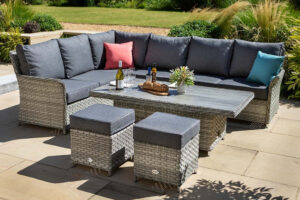
Cleaning: Twice a year with warm water and neutral soap. You can use a garden hose (without pressure) to rinse.
⚠️ Avoid: Abrasive cleaners (cause cracks) and pressure machines.
Tip: Protect them with breathable covers in winter so that the thread does not lose its flexibility with the cold.
🧪 Resin (Versatile and lightweight)
Cleaning: Brine water and a soft bristle brush. If they lose their shine, use specific waxes such as Hartman Wax.
⚠️ Avoid: Hot utensils (pans/pots) directly on the surface and chemical solvents.
Tip: Do not cover them with plastic in winter to prevent moisture stains or discoloration; it is better to store them indoors.
Wood of Teak (Natural and robust)
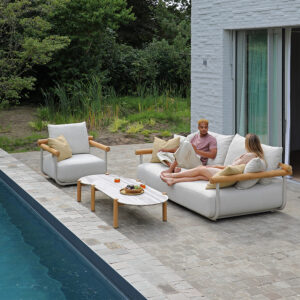
Cleaning: If you like the grayish tone, all you need is water and a teak cleaner. If you prefer the original color, apply a teak protector twice a year (always with dry wood).
⚠️ Avoid: The pressurized water makes the surface rough.
⛱️ Umbrellas and Textiles
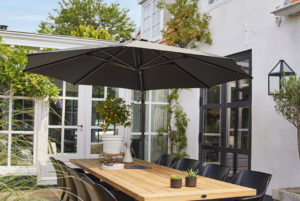
Umbrellas: Clean them open with mild detergent and a hose. Key: Let them dry completely before closing them or storing them.
Textiles: Clean up spot stains with a damp cloth. Do not submerge the fabric in water to avoid leaving any traces or marks.
📦 Smart storage
| Type of furniture | Best way to store it |
|---|---|
| Wood | Covered and dry place, ventilated, without direct plastic |
| Metals | Covered, protected from the ground, ventilated |
| Synthetic rattan | It can stay outside if it is protected with a breathable cover |
| Textiles | Stored in waterproof bags in a dry interior |
| Parasols | Closed, clean, stored in a vertical position or hung |
✅ Conclusion
Investing in good garden furniture is worth it if it is properly cared for. With simple routines, you can extend the lifespan of each piece and keep your outdoor space looking like new.
And if you have doubts about how to protect a specific material or are looking for furniture that requires little maintenance, The De Tropen team can help you choose with confidence. We are available to advise you before and after each purchase.
💡 Tips from De Tropen
Gold rule: Never use pressure water pumps on any garden equipment.
Winter: Although they are durable, using breathable covers or storing them inside makes a difference between a piece of furniture that lasts 3 years and one that lasts 10.
At De Tropen we will be happy to advise you on how to care for them so that you can enjoy your outdoor furniture for many years to come.
You can learn more about all these products in De Tropen in Vélez-Málaga, Málaga and in www.detropen.es, where we will be happy to welcome you.
What did you think of this post? Leave your comments below.